
Overview
An analog system causing bottlenecks and mishaps throughout employee daily workflows.
The business was growing, but its current system could not keep up. Employees and clients faced unnecessary friction, bottlenecks, and delays. Backed and delayed orders affected the store’s reputation and newfound momentum. Here is how I rebuilt that system and how I worked around unexpected constraints.
SOLUTION
A self-service kiosk working in tandem with a work management system
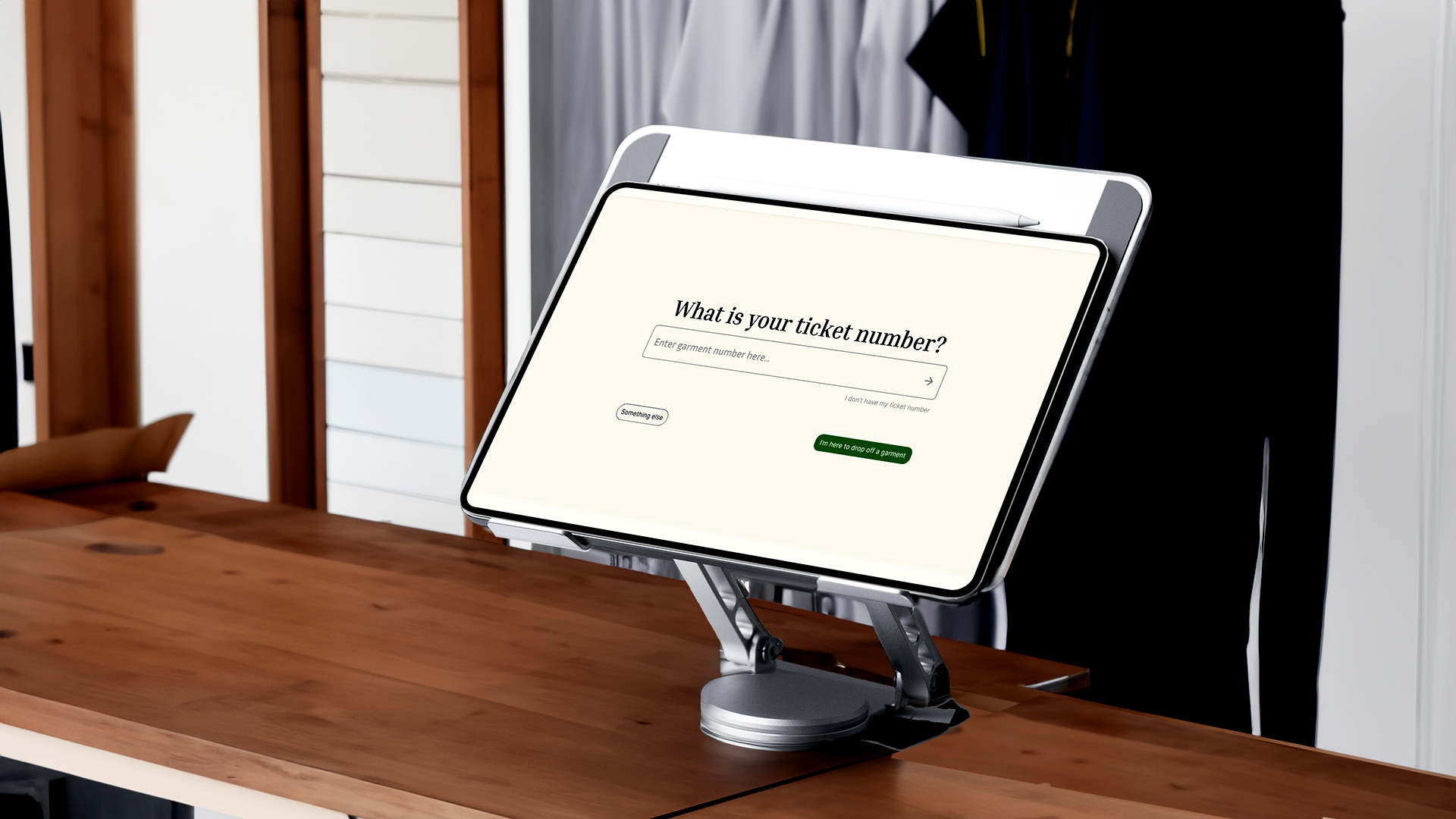
Alteration’s new system is a unified platform that handles front-end customer service interactions, daily operations, and management. The process begins with the customer-facing kiosk. A customer drops off their garment, generating a unique garment ticket.
The ticket is organized and prioritized by pick-up date as soon as it enters the system. Once the tailor finishes the job, the head tailor or seamstress reviews it. Without the tailor’s approval, the garment cannot be marked as finished.
On the business management side, completed orders translate into sales. The business owner can see quarterly growth and sales.
Discovery
Backedlogged orders started to get in the way of business.
While redesigning Alteration’s website, I worked at the store for two weeks. During those two weeks, I noticed that its growth was outpacing its current operating system.
The store relied heavily on ticket stubs because of their mental model. Many alteration shops around New York rely on ticketbooks; that is how it has always been done. For a growing business, this system created backlogged orders, which indirectly affected customers.
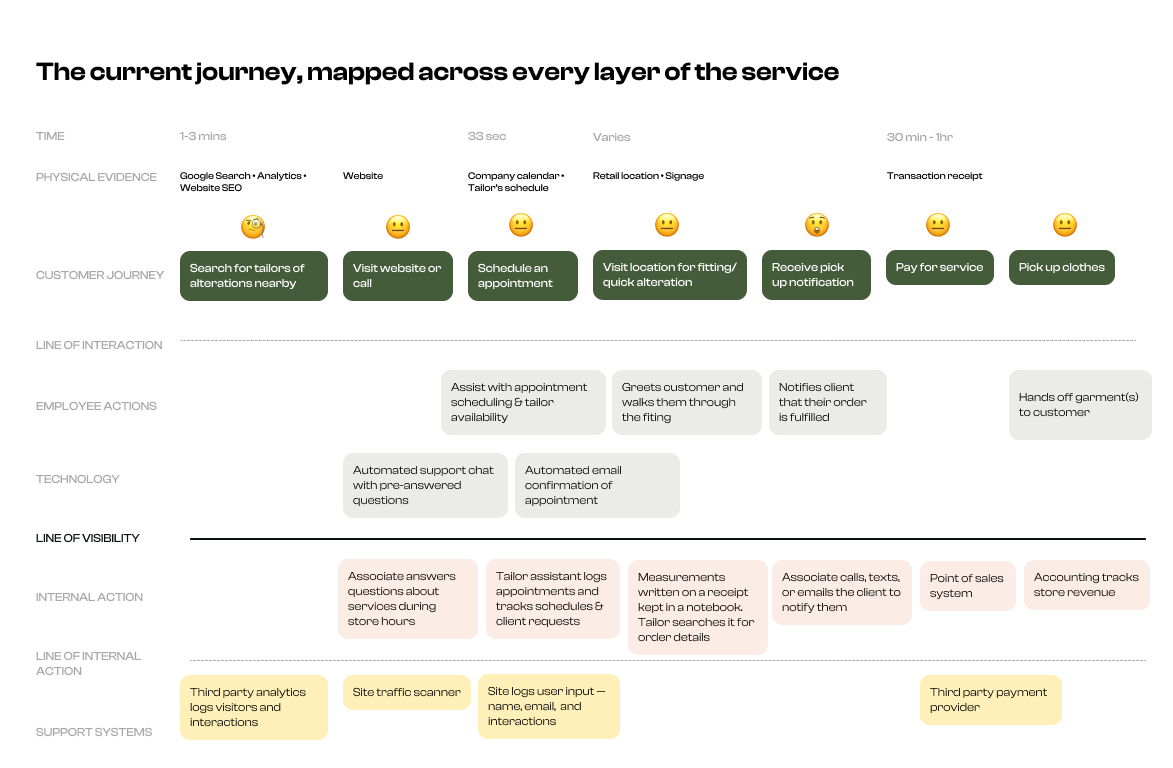
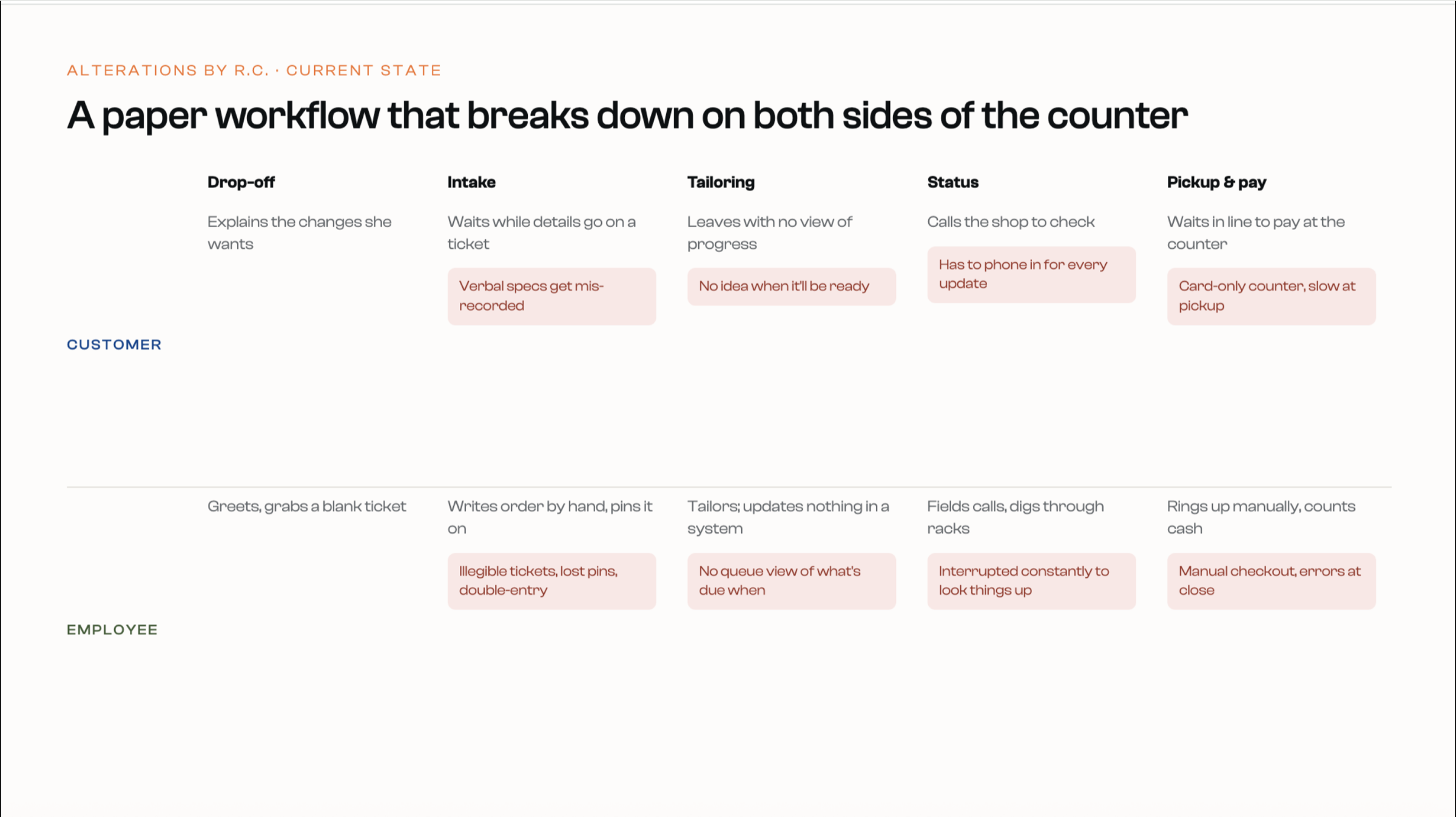
The service blueprint shed light on improvement areas between front-facing and back-end operations. Employees took on too many tasks, limiting their time to work on garments, and ticket stubs got lost easily.
Pain Points
- Cognitive overload: The tailors occupied two roles at once: tailors and sales associates.
- Unstructured legacy system: Additionally, the system in place was outdated and relied heavily on analog artifacts, which did not leave room for automation or organization.
Key Insight: Daily operations heavily relied on data provided by the customer; however, the current system did not utilize this information well.
Research
Competitive analysis
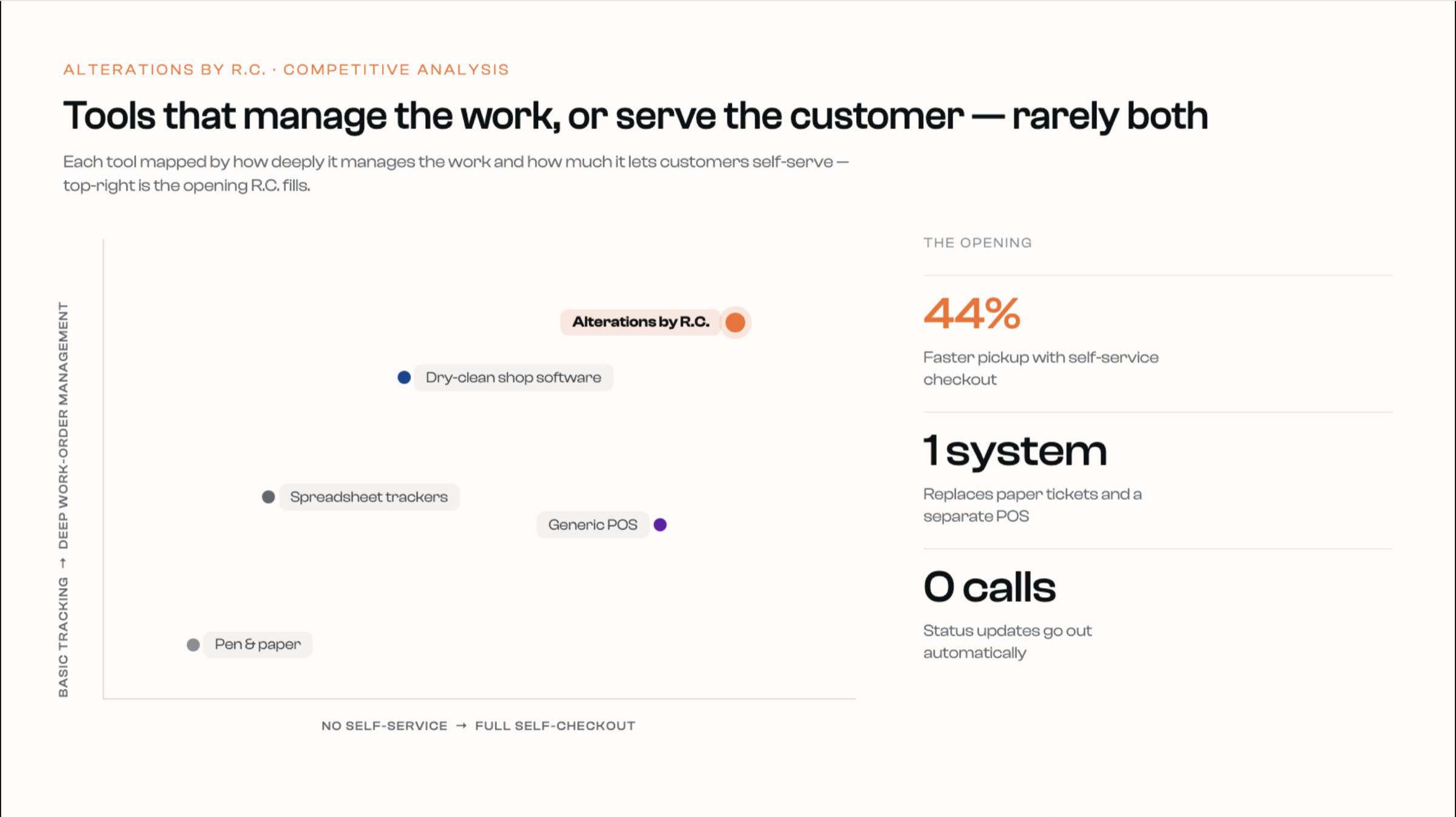 Although there are many business management and work management software available, they were incompatible for a tailoring business. They were best suited for projects and IT-related tasks, not for handling or managing garments.
After more research, I came across various platforms (i.e., Orderry, Atelierware, etc.). The one that appeared to be suited for tailoring and dry cleaning businesses was Geelus.
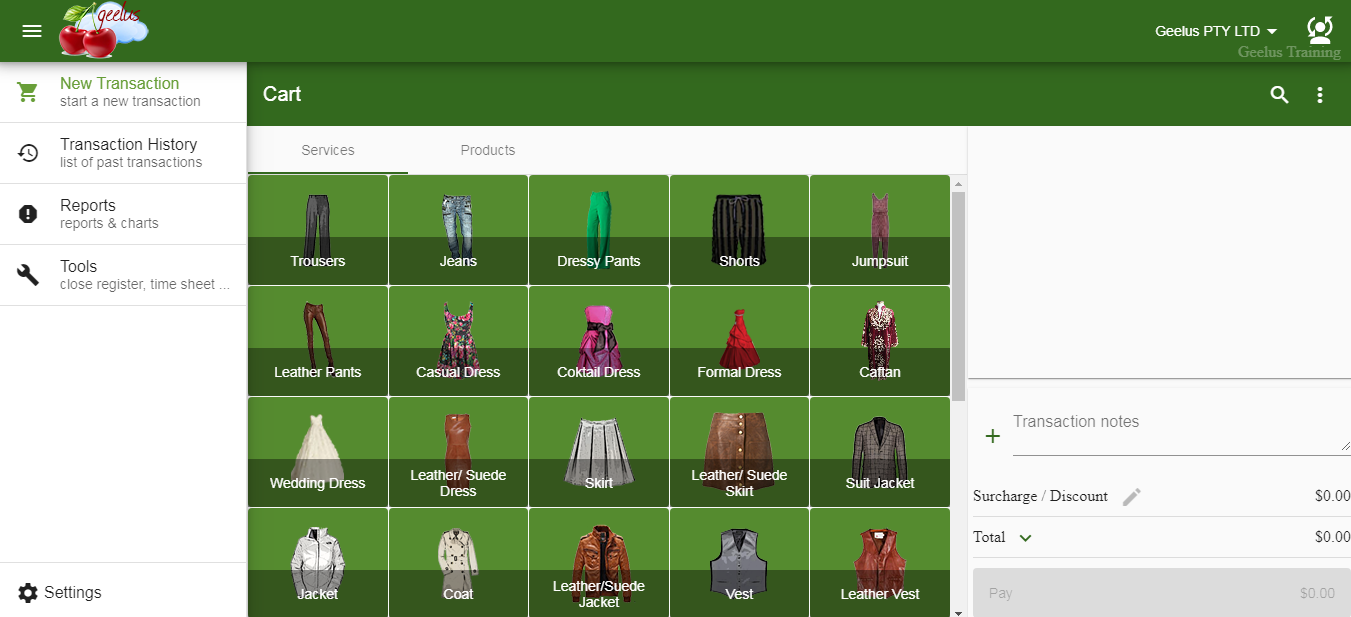
However, the interface of this software required fixed prices and ran more like a POS system instead of an organizational and management tool. Alterations needed a tool that could create customizable tickets, bridge between operations and customer-facing interactions, accept payments, but above all ease the workflow of employees at Alterations by R.C.
Process
How might I bridge customer-facing experiences and daily operations into a streamlined system while maintaining human interactions?
Maintaining human connections in the designI needed to create a system that would ease the workload of tailors but also keep personal interactions between customers and staff. By observing and talking to the business owners and staff, I realized that this system needed to integrate into their daily life, serving as a work companion.
On the customer-facing side, I wanted to keep human interactions between customers and staff.
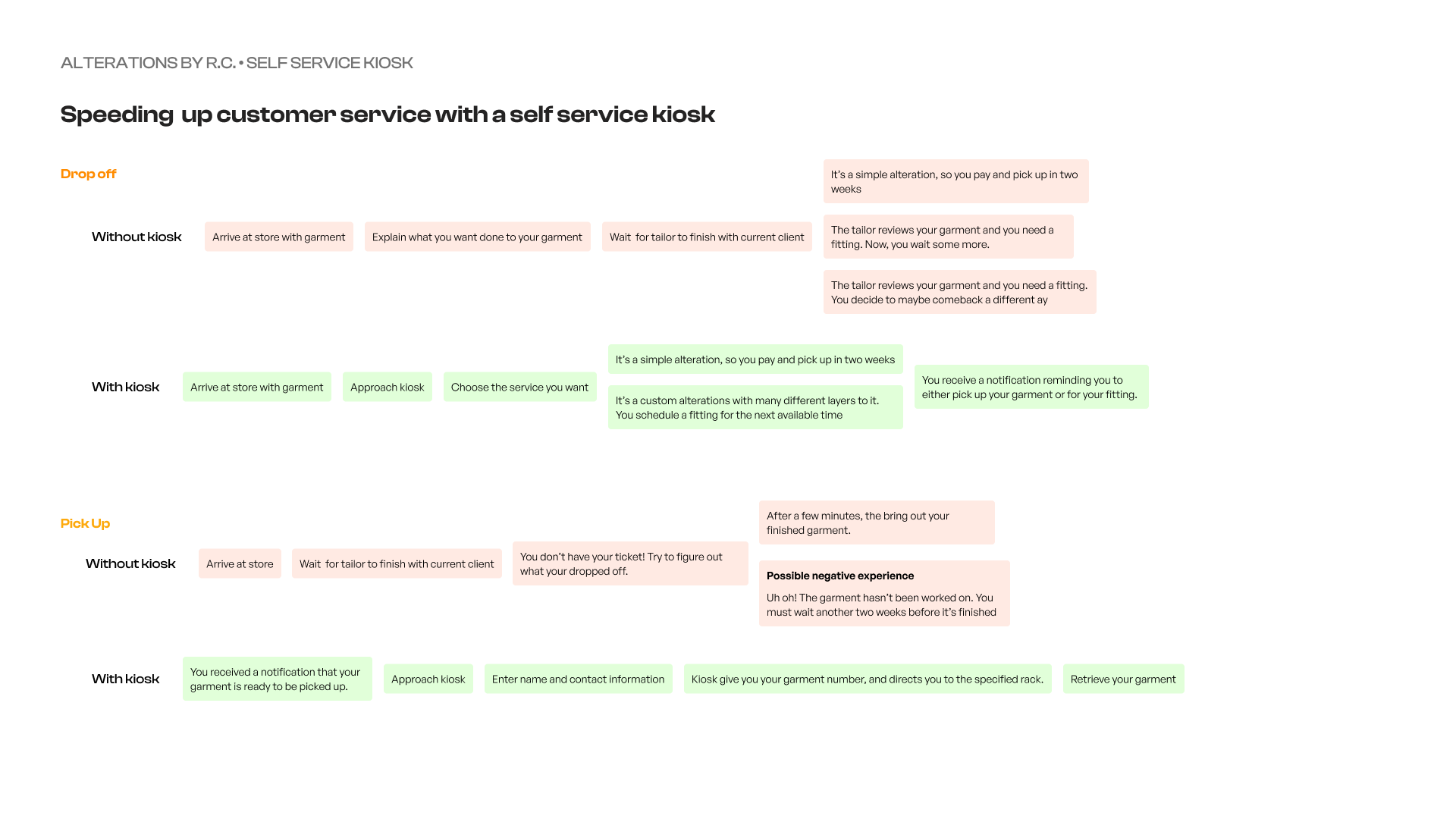
The first access point for this system was the self-service kiosk. The kiosk would serve as an aid to tailors who might be busy doing fittings or working on large orders. The self-service kiosk would handle simple interactions— drop offs for adding buttons or zippers, scheduling fittings, or picking up items. Thus, eliminating customer wait times and work for tailors.
Engineering + Design
Linking the self-service kiosk to operations.
Now, the kiosk allowed for customer pick-ups, taking the workload tailors sometimes needed to do. However, the creation of the pick-up flow was tricky.
How can I create something that keeps a history of picked-up items for the business owner, but clears out every week?
A design decision informed by engineering helped finish the pick-up flow. A ticket enters and receives a randomized number. However, at the end of the lifecycle, that specific garment is assigned a number from 1-10. These numbers (1-10) correspond to digital lockers, represented as cubicles in the store. When the customer receives the notification that their item is complete, they also receive a number.
The challenge was then determining how the program knew when to “clear out” the locker to add a newly finished garment. The owner needed to keep a history of payments and completed orders, but customers needed to make sure that their personal information was safe.
Storing payment completion info, dates, and emails only in encrypted backups that are only accessible to specific people eliminated the worry of handling data.
On engineeringCo-creating the MVP with Claude and publishing on Vercel to stress test new system
To test the effectiveness of my design, I wanted to create a working prototype that employees and customers could use. The objective was to see if this new system could impact business operations and test customer use in real time.
Technical limitations and considerations
One technical limitation was connecting the current payment system to the kiosk. Customers pay via a Verifone, and the receipt is typically attached to the garment.
My system should do something similar, connecting the current system to the device in store.
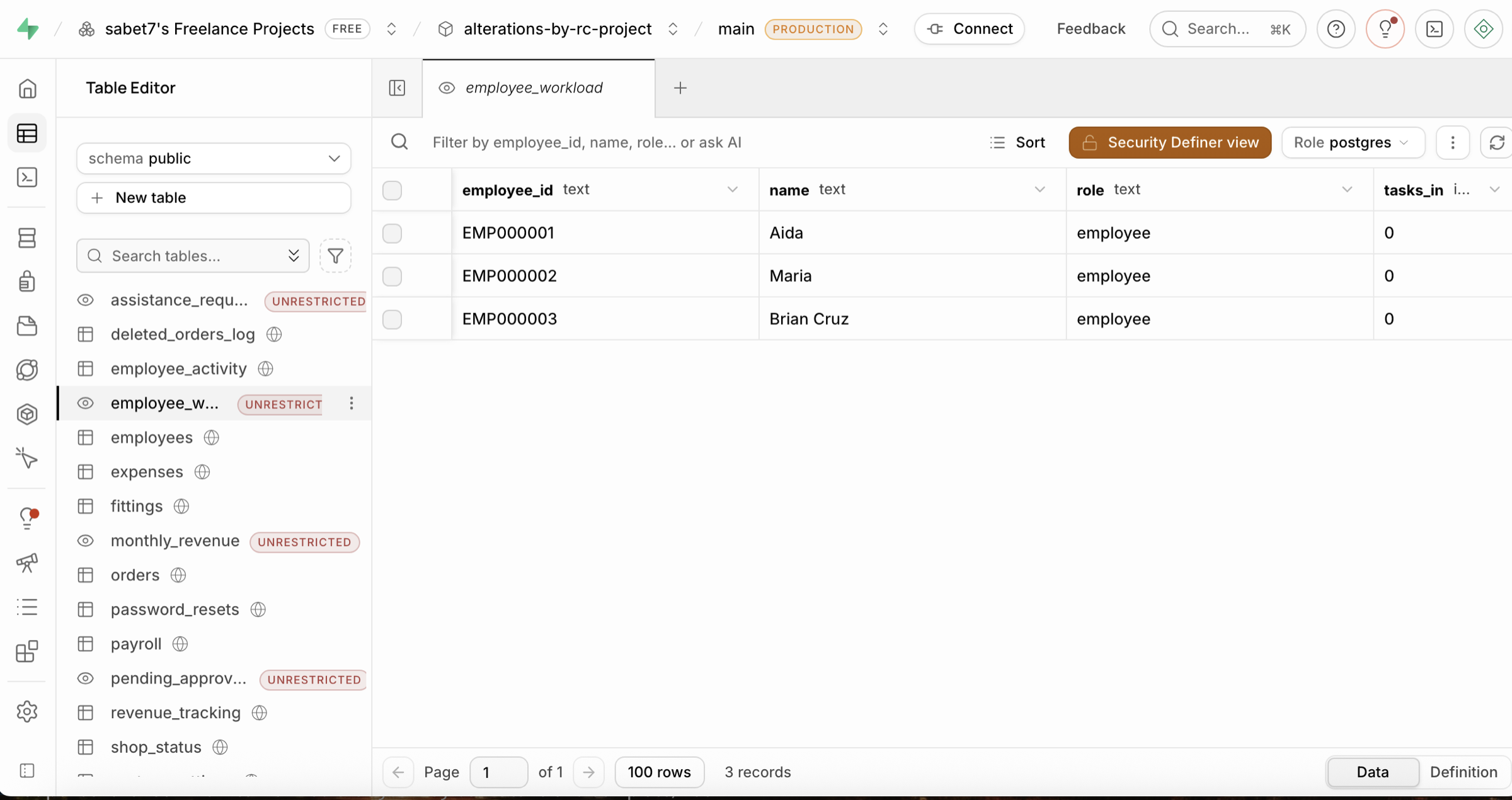
After designing the main screens, I hopped on GitHub, set up my code space, and set up a staging layer in Supabase with SQL tables to store payments, login credentials, and ticket information.
Current designs
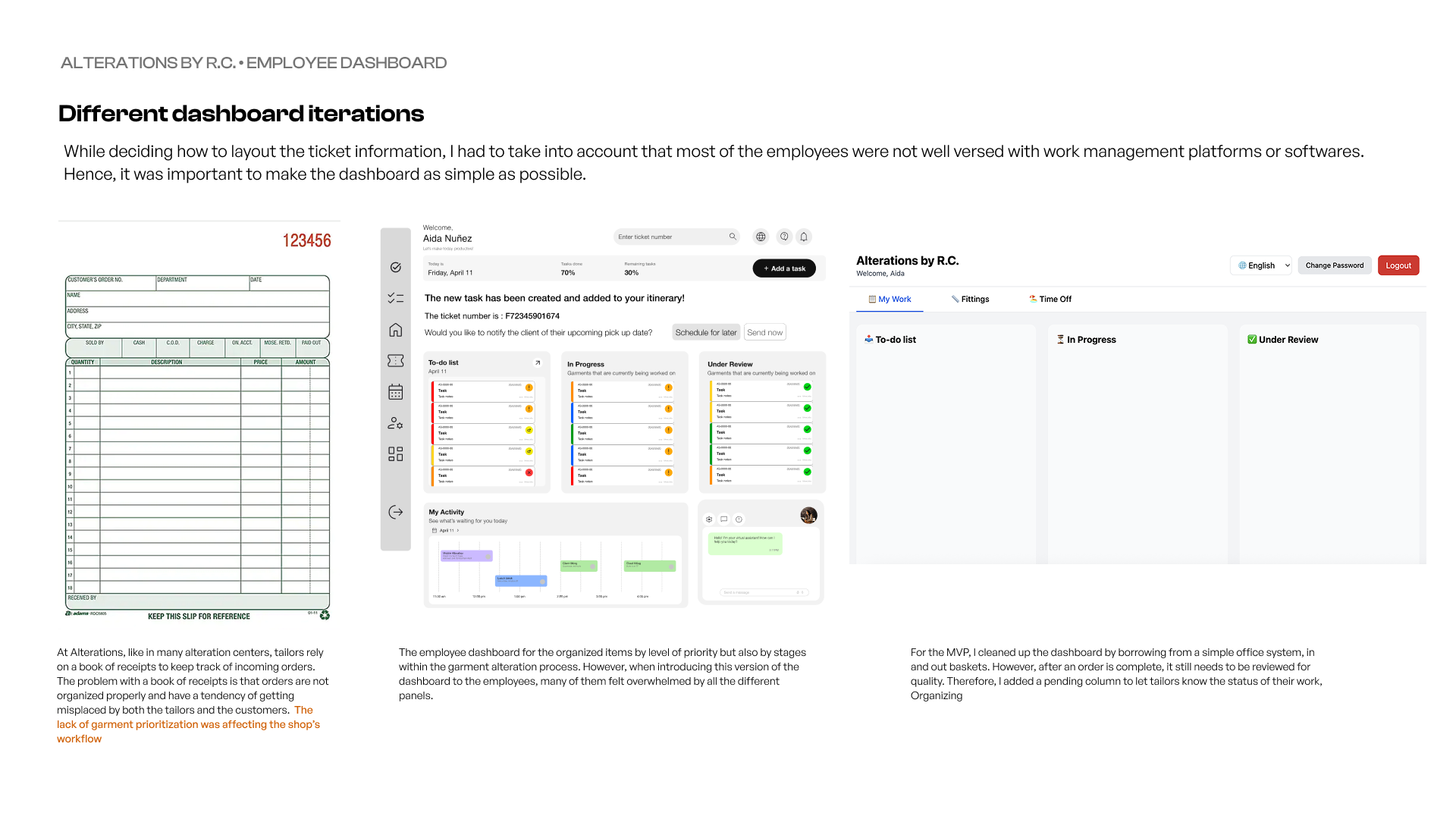
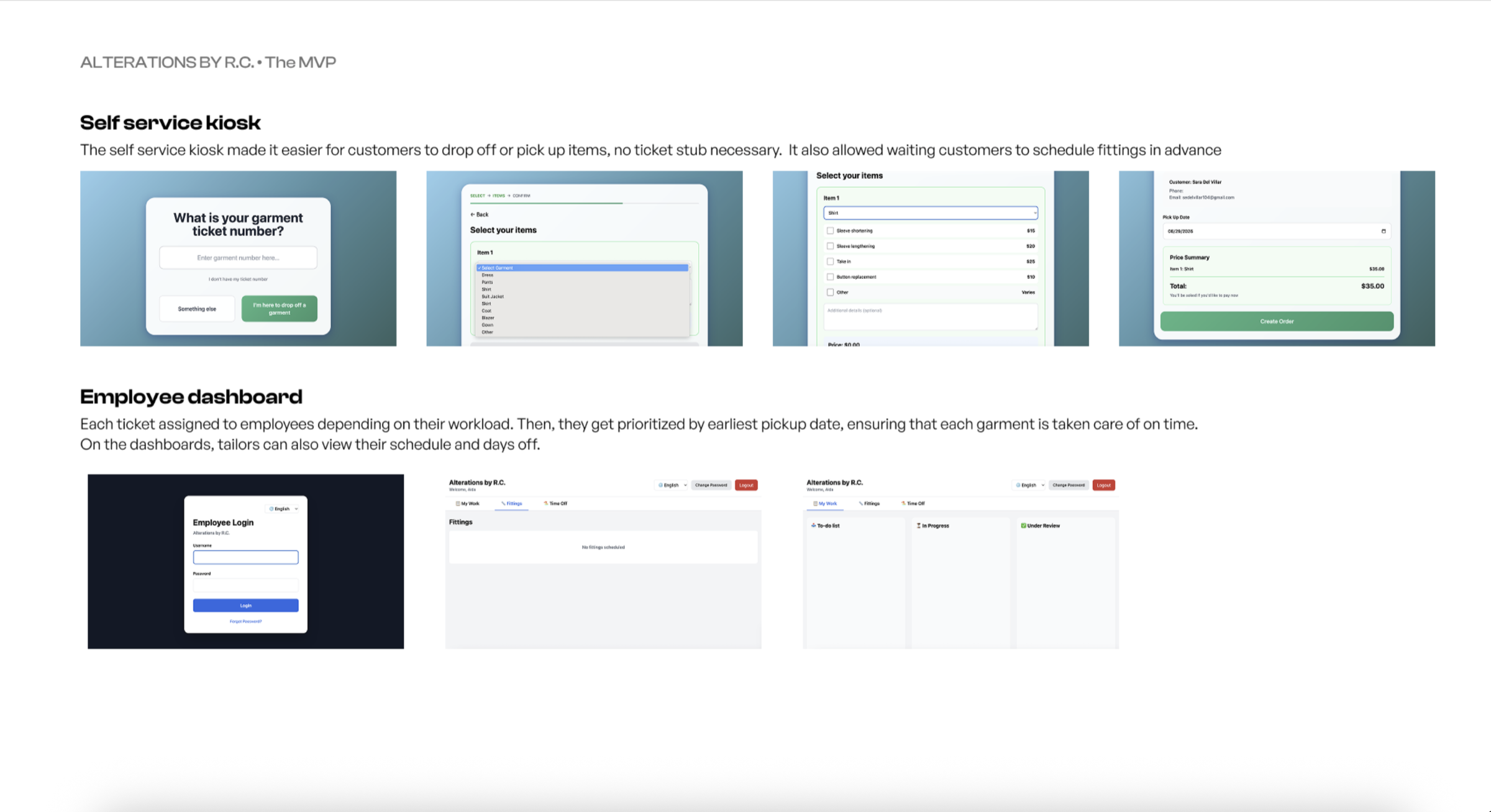
To reduce employees’ cognitive load, I designed a simple dashboard with two sections. The sections are inspired by "In" and "Out" trays, creating a clear and understandable hierarchy. Each ticket is organized and color-coded by priority.
Self-service kiosk
On the customer-facing side, customers could easily pick up and drop off items without interrupting the employee’s workflow.
Visually tying it all together.
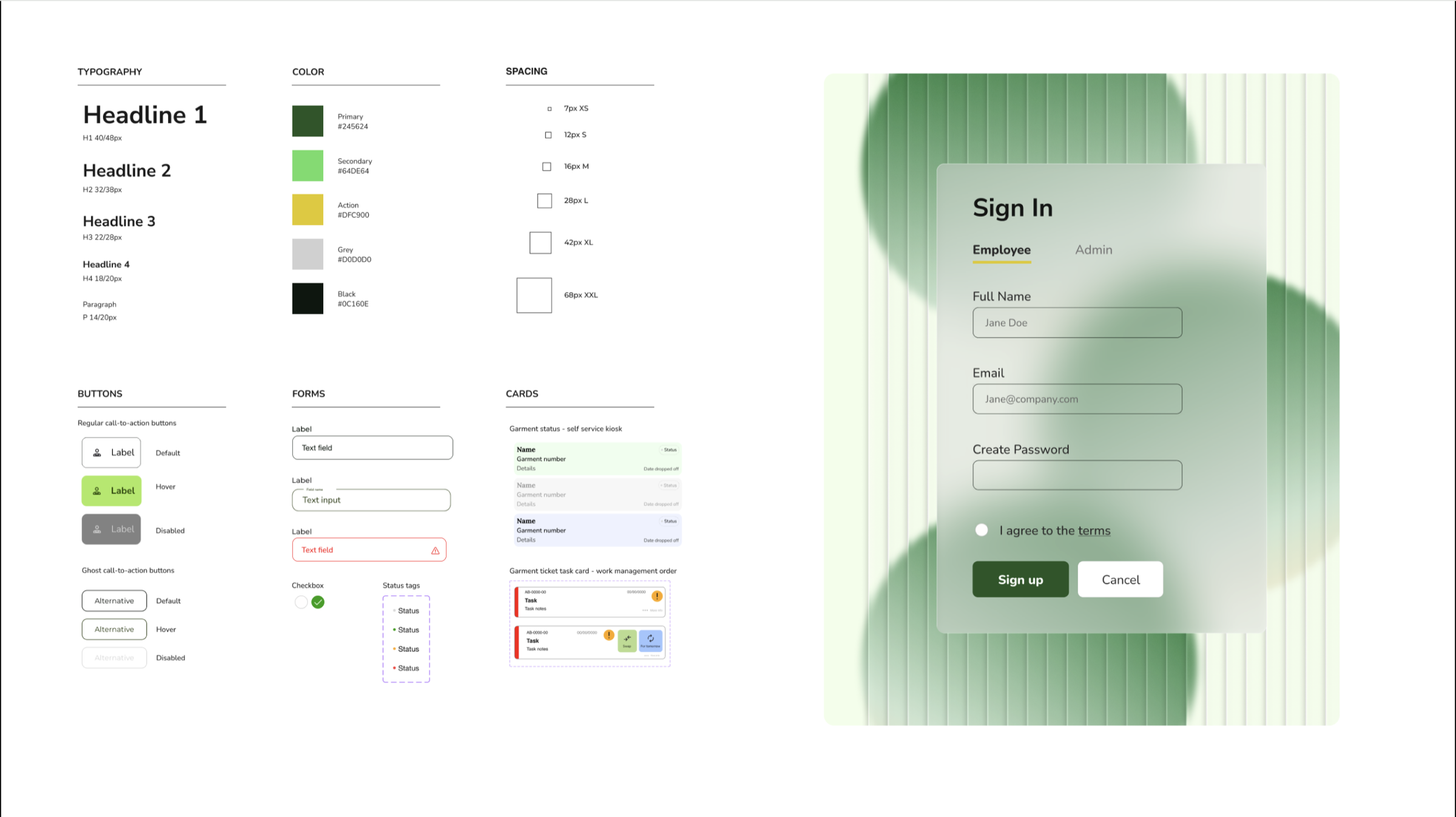
The visuals for both the frontend and backend needed to feel cohesive. I wanted to achieve this through a visual guideline, leaving a guide for future designs.
Roadblocks during MVP stage
A few days before testing the MVP design, I learned that the shop no longer had a WiFi connection. Luckily, I had created a paper-based system that still functioned the same as the MVP. This came about as a training foundation that could get employees accustomed to the new system before the digital one was in place.
With these new constraints, I had to pivot and test the system in a different way. I chose to test out an analog version of my design to see if the new organizational architecture would assist the employees and create a mental model for when the new digitized system would be implemented.
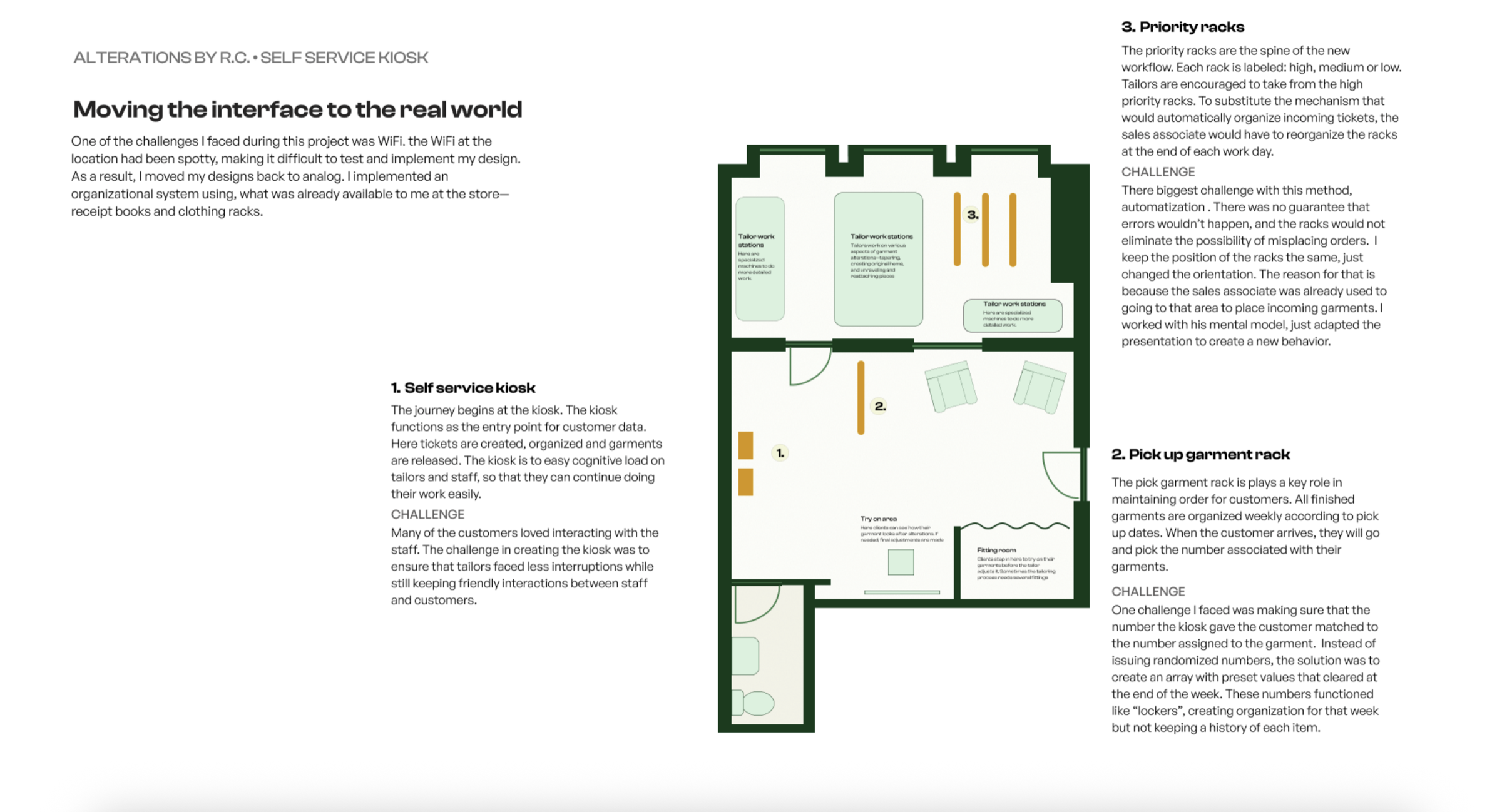
The redesign consisted of a manual for daily operations, a new receipts booklet that allowed the sales associate to detail the type of alteration the garment needed, color-coded stickers, a big binder, and visual identity guidelines.
The analog MVP has worked and held on so far. Once the WiFi issues are resolved, the owners are eager to implement the digital system I created.
"This new way of organizing clothes has helped us work faster. The designated areas too. Everything is organized and easy to find." - Aida (Head Seamstress)
Reflection
UIs don't only live in digital spaces.
On what I learned in the processAs a designer, I've always believed that user interfaces exist on digital surfaces and that designing for digital experiences is the sole job of a UX or product designer. However, when I had to adapt my design and revert to an analog format, I realized that it was still design. I was still creating an experience informed by user needs and feedback that was aimed at solving a specific problem.